Ask For A Quick Quote
we will contact you within 1 working day, please pay attention to the email with the suffix
"info@gd-xys.com"
News
—
Forging and Casting: The Two Souls of Metal Forming, A Dialogue of Power and Flow
2025-10-17 08:32:43
Click:
Throughout the long history of human metalworking, forging and casting stand as two masters with distinct techniques—one forging metal's structure through relentless hammering, the other shaping its form via molten metal. While they jointly form the bedrock of modern industry, their fundamental principles, application scenarios, and final product characteristics differ profoundly. Understanding their distinctions is the key to unlocking the secrets of the metallic world.
Core concept: A figurative metaphor
Before going into the technical details, we can use a vivid metaphor to summarize:
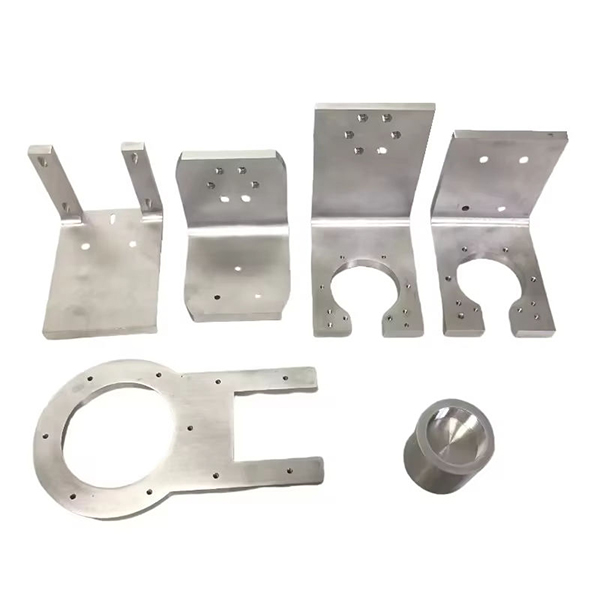
Forging: Like kneading dough. You compact the pores in the dough through repeated kneading, pressing, and squeezing, making it dense and tough. Forging is the application of great pressure on a metal to make it plastic deformation in a solid state.
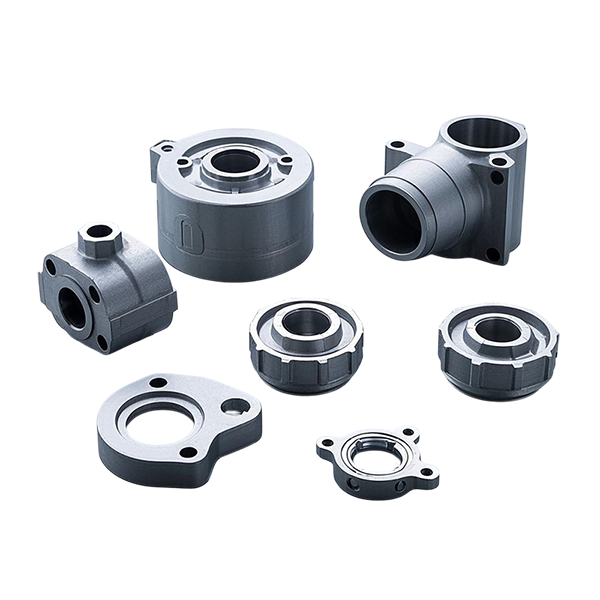
Casting: Like making ice cubes, it involves pouring molten metal into a mold. As the metal solidifies, it takes on the mold's shape. In casting, molten metal is poured into a pre-shaped mold cavity, and the resulting casting is obtained after cooling and solidification.
I. Fundamental difference: the essence of the process
1. Forging-Shaping in Solid State
The process involves heating metal billets (typically bars or ingots) to a temperature above the recrystallization point (typically the forging temperature range for steel) to enhance plasticity while maintaining solid state. Subsequently, equipment such as forging hammers or presses applies intense impact force or pressure to induce plastic deformation, thereby achieving the desired shape and dimensions.
Key words: heating, pressure, plastic deformation, solid state.
2. Casting-The 'solidification and molding' process in liquid state
The process involves heating metal in a furnace until it melts completely into a liquid state, then pouring it into a pre-made hollow mold with the desired product shape. The molten metal fills and flows through the mold cavity, eventually solidifying into a casting that perfectly matches the mold's configuration.
Key words: melting, pouring, flow, solidification, liquid state.
II. Performance and structure: a contest of internal quality
This is the core difference between the two, which directly determines the application field of the product.
Forging features:
Organically dense and excellent mechanical properties: In the forging process, the loose, porosity and other defects in the metal are compressed, and the coarse grain structure is broken and refined to form a dense fibrous streamline (streamline). This makes it:
Higher strength: can withstand greater load.
Better resilience: less likely to break when impacted.
High fatigue strength: longer life under alternating load.
Anisotropy: Mechanical properties are directional, with properties along the streamline direction usually better than vertical direction.
Characteristics of castings:
The organization is relatively loose, and there is a risk of casting defects: when the liquid metal solidifies, it is inevitable to produce shrinkage, which may form shrinkage holes and shrinkage loose. At the same time, there may also be defects such as porosity and slag inclusion.
The mechanical properties are generally lower than that of forgings of the same material: because its internal structure is not as dense as forgings, its strength, toughness and fatigue resistance are usually inferior to forgings.
Anisotropy: The properties are basically the same in all directions (unless there is a special directional solidification technique).
3. Shape complexity and material utilization
Limitations and advantages of forging:
Limited shape complexity: Due to solid-state deformation, metals have difficulty flowing and forming parts with complex internal cavities, thin walls, or intricate details. These components are typically used for manufacturing relatively simple yet critical load-bearing structures such as engine crankshafts, connecting rods, gear blanks, main shafts, and hoisting hooks.
High material utilization: the near-net forming technology is usually used, the cutting allowance is small, less waste.
Flexibility and challenge of casting:
The shape is almost unlimited: 'There is no casting that cannot be cast.' It can produce extremely complex parts (especially with complex cavities), such as engine blocks, machine tool beds, art pieces, and complex pump shells.
High material utilization: The molten metal can fill every corner of the mold and directly form the final shape, resulting in high utilization of the blank. However, more mechanical processing may be required later.
IV. COSTS AND PRODUCTIVE EFFICIENCY
Forge :
Mold cost: higher (especially for die forging molds).
Equipment cost: large forging equipment is needed, and the investment is huge.
Production cost: the unit cost is usually higher than casting, especially for large parts.
Cast-on outwell :
Mold cost: varies with the process, sand casting mold cost is low, die casting, investment casting mold cost is high.
Equipment cost: relatively flexible, can be large or small.
Production efficiency: very suitable for mass production, the cost of a single casting is low.
Summary and comparison table
| Dimension of characteristics | Forge | Cast-on outwell |
| Processing status | Solid (heated but not melted) | Liquid (fully melted) |
| Core principles | Plastic deformation (applying pressure) | Solidification molding (cooling after filling) |
| Interior tissue | Fine grain, dense structure and complete flow line | The structure is relatively loose, and shrinkage holes and air holes may exist |
| Mechanical property | High strength, high toughness, high fatigue strength | Lower strength, toughness and fatigue strength |
| Part Shape | Relatively simple, difficult to manufacture complex internal cavity parts | Extremely complex, parts can be manufactured with complex internal cavities |
| Stock utilization | Higher (near net formation) | tall |
| Cost of production | Mold and equipment costs are high, and the cost per unit is usually high | Die costs vary by process and are low per unit in large quantities |
| Typical Application | Key components of load bearing: spindle, connecting rod, gear, tool | Complex-shaped components: engine cylinder, machine tool bed, artwork, valve pump body |
How to choose: A demand-based trade-off
Choosing forging or casting is never a question of 'who is better', but a decision of 'who is more appropriate'.
When you need 'reliability and strength', choose forging. For critical components that need to withstand high loads, impact forces or alternating stresses (such as aircraft landing gear, power transmission shafts, heavy machinery load-bearing parts), forging is the indisputable choice. Its high reliability and excellent mechanical properties are the guarantee of safety and performance.
When you need 'complexity with cost-effectiveness', casting is your best bet. For parts with intricate geometries—especially those containing internal cavities where absolute strength isn't the top priority (think car engine blocks, faucets, furniture hardware, or heavy machinery bases)—casting delivers precision-engineered shapes at a fraction of the cost. This makes it the ultimate solution for balancing functionality and budget.
In summary, forging is the sculptor of strength, while casting is the magician of form. Each has its own strengths and work in tandem within modern manufacturing, shaping metal materials into products with diverse forms and properties that drive the entire industrial world's operations.








Contact Supplier
Send your message to this supplier
Top
Contact Supplier
Send your message to this supplier

Xinyusheng Metal Products

点击右上角
分享给朋友吧
NAVIGATION
PRODUCTS
CONTACT

+86 134 1753 9458
+86 150 1998 3523
+86 137 2888 0942

info@gd-xys.com

No.10, Qianling 5th Street, Jichigang Village, Baoshan Community, Huangjiang Town, Dongguan City

Xinyusheng Metal Products
CONTACT
Add:No.10, Qianling 5th Street, Jichigang Village, Baoshan Community, Huangjiang Town, Dongguan City
Phone:+86 134 1753 9458
+86 150 1998 3523
+86 137 2888 0942
E-mail:info@gd-xys.com
Copyright © 2024 Dongguan Xinyusheng Metal Products Co., Ltd
