Ask For A Quick Quote
we will contact you within 1 working day, please pay attention to the email with the suffix
"info@gd-xys.com"
News
—
Hot Forging
2025-08-22 14:37:23
Click:
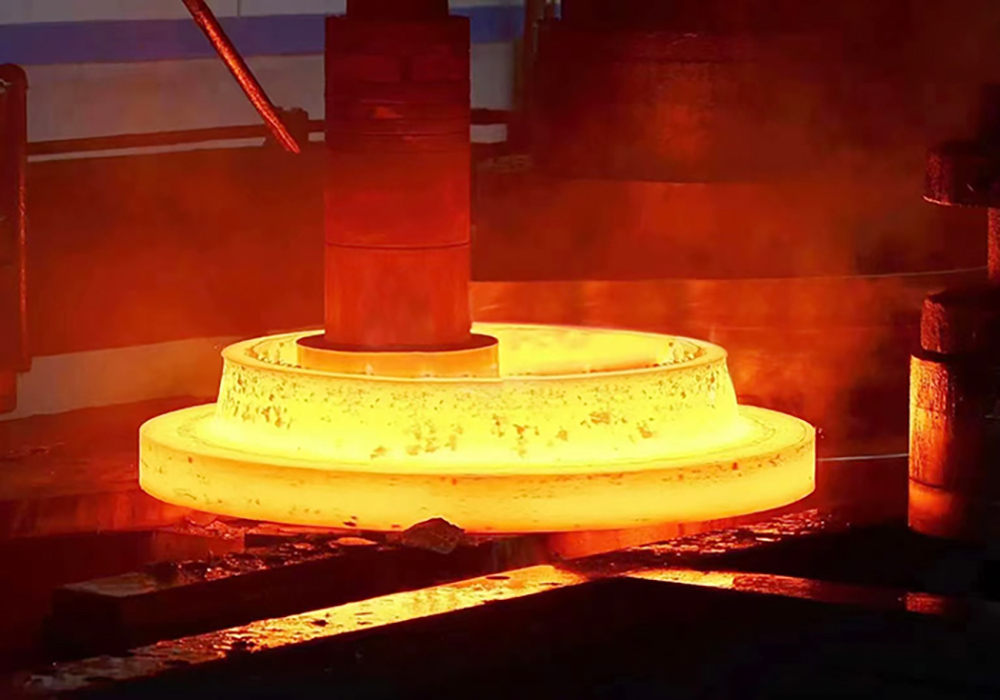
Core definitions
Hot forging, also known as hot die forging or hot forging, is a metalworking process. It involves heating metallic materials above their recrystallization temperature (typically 70-80% of the metal's melting point) to achieve high-temperature plasticity. Subsequently, pressure is applied through equipment like forging hammers or presses to induce plastic deformation within mold cavities, ultimately producing forgings with specific shapes, dimensions, and properties.
Simply say, the metal is softened and then crushed into the desired shape.
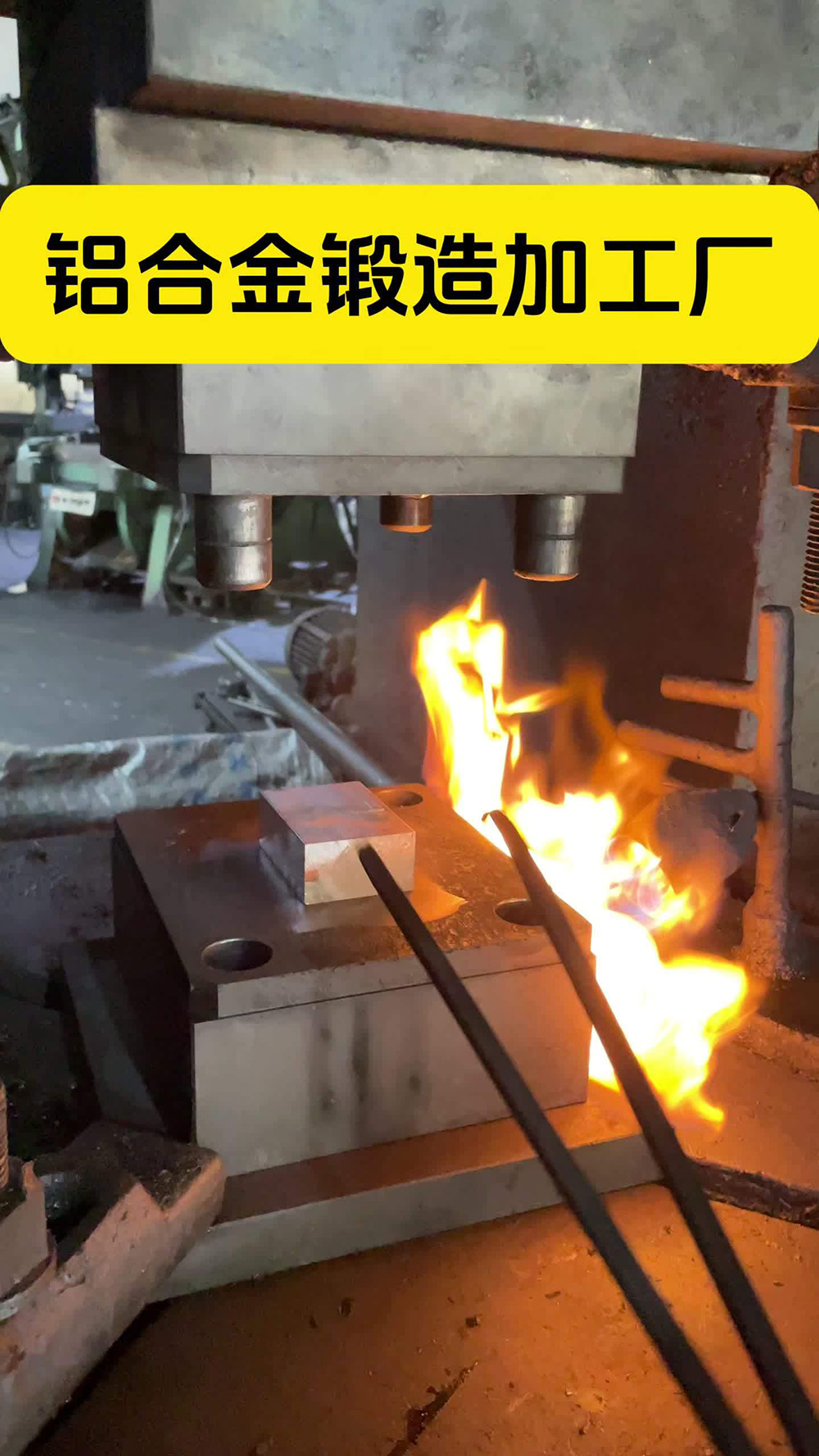
Detailed process of hot forging
- Input: Cut long metal rods (such as steel billet, aluminum billet, etc.) into specific size and weight of billet.
- Heating: The billet is placed in an industrial furnace (such as an induction heating furnace, gas furnace) and heated to the predetermined forging temperature. For steel, this temperature is usually between 1100°C and 1250°C, at which time the steel will appear bright yellow or orange.
- Forging: The heated billet is quickly transferred to the forging equipment and placed into a pre-designed mold. Through a huge impact force or pressure, the soft metal at high temperature is forced into the cavity of the mold.
- Cutting edge: After forging, there is usually a ring of excess thin metal (called flash) around the part, which needs to be removed by stamping die.
- Follow-up treatment: depending on the requirements, the forging may also need to be heat treated (such as normalizing and quenching to adjust the internal structure and mechanical properties), cleaned (such as shot blasting to remove oxide scale), machined (to achieve precise dimensions) and inspected.
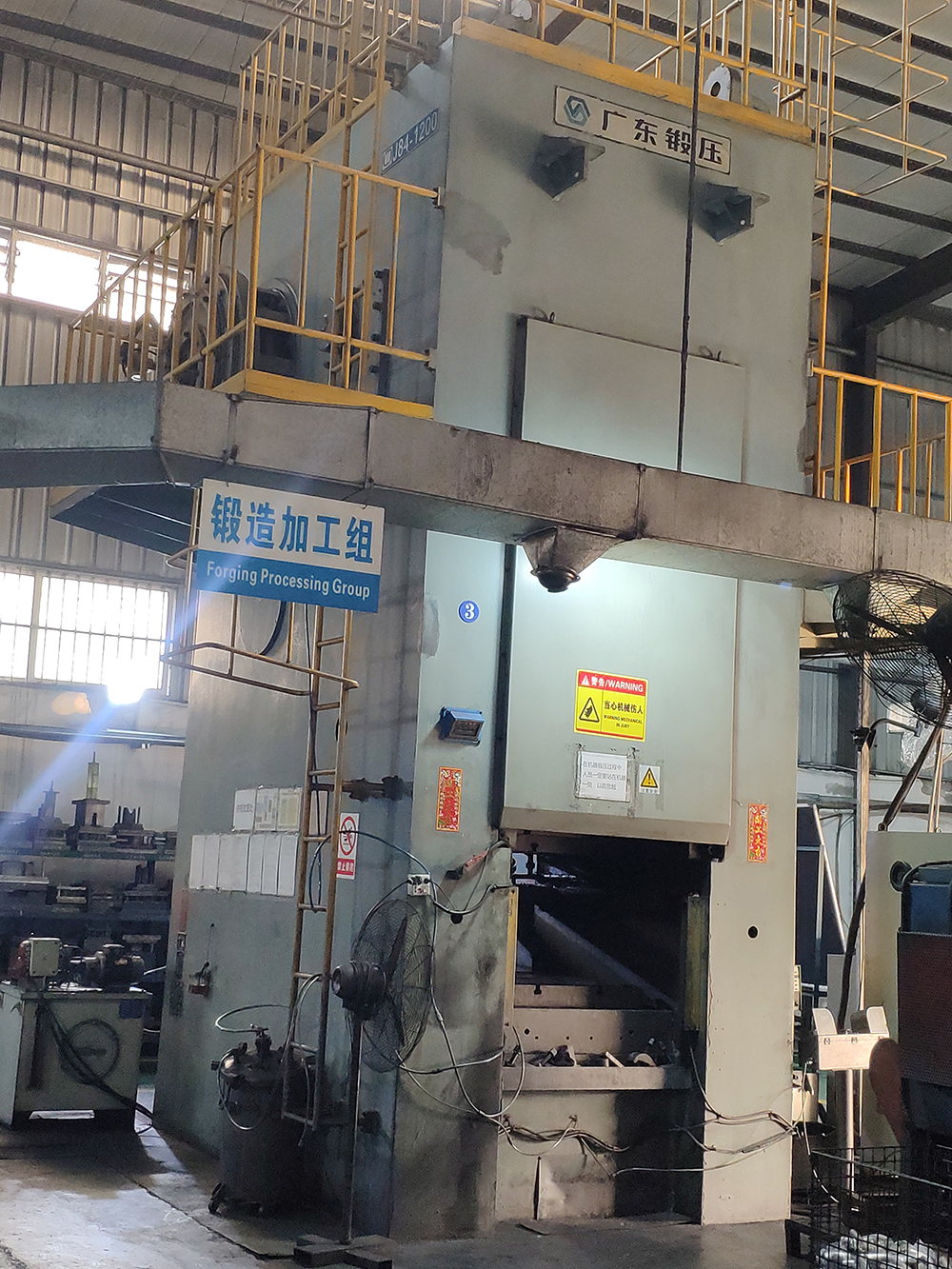 | 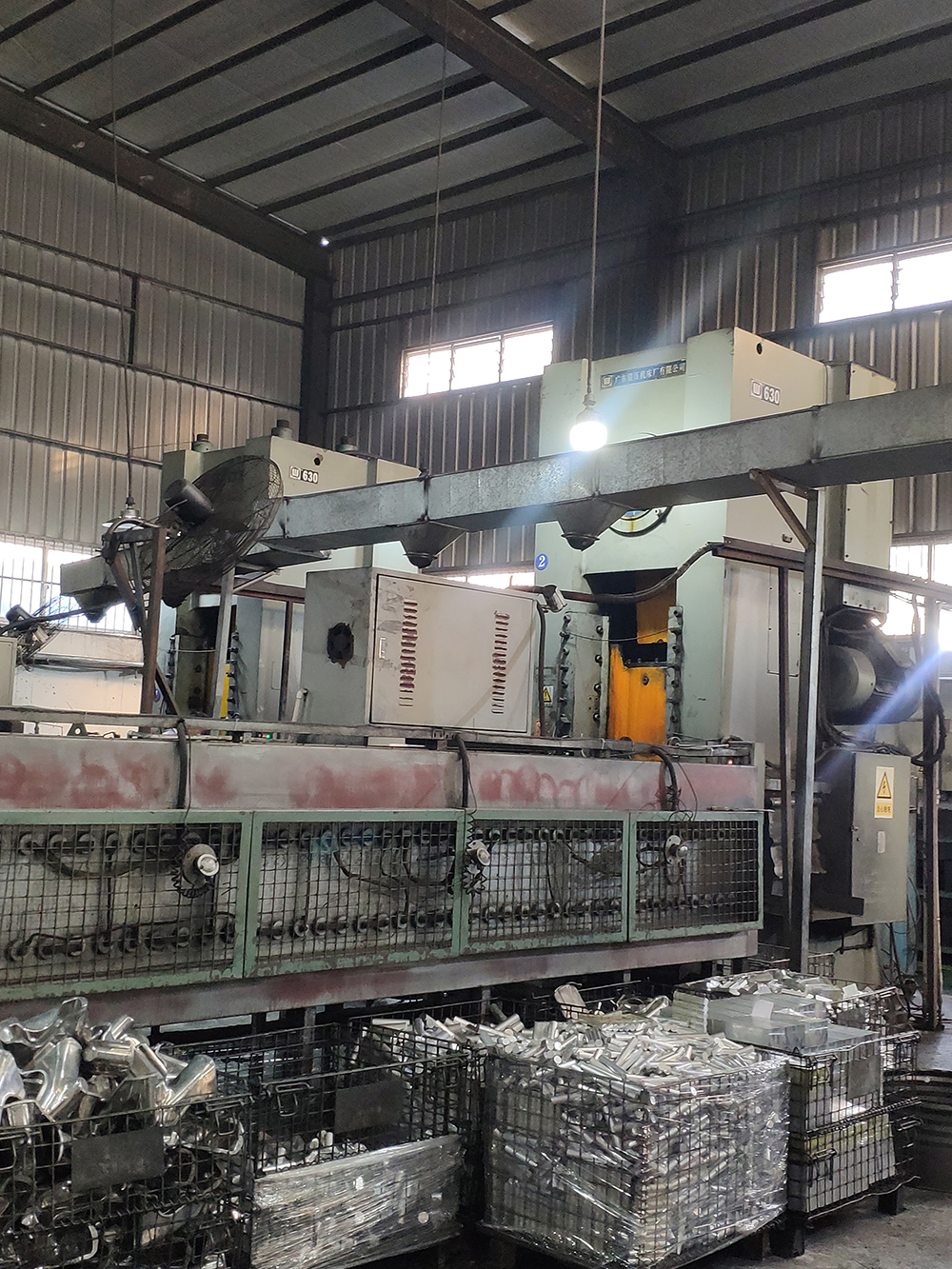 |
Key characteristics of hot forging
- High temperature operation: the core feature is to process above the recrystallization temperature.
- Good plasticity, low deformation resistance: Metals become very soft and fluid at high temperatures, so they can be shaped into complex or large parts with relatively little force. It can also significantly change the cast state of the metal and break the large dendrites.
- Production of oxide: The surface of the metal will react with oxygen in the air at high temperature to form a layer of oxide. This will affect the surface quality and dimensional accuracy, which usually requires subsequent cleaning.
- The dimensional accuracy is relatively low: due to thermal expansion and cold contraction, the size of the forging after cooling will be different from the mold cavity, and the existence of oxide scale will also affect the accuracy, so it is usually necessary to leave a machining allowance.
- Enhancing metal properties: This stands as one of the most crucial advantages of hot forging. Through the forging process, inherent casting defects such as porosity and voids are eliminated, internal cracks are welded shut, grain structures become refined, and flow lines are evenly distributed along the part's contour. These combined effects significantly improve mechanical properties including strength, toughness, and fatigue resistance.
Hot forging vs. cold forging vs. warm forging
To better understand hot forging, compare it with the other two common forging processes:
| Characteristic | Hot forging | Cold-forging | Warm forging |
| Temperature | Above the recrystallization temperature | Room temperature | Below the recrystallization temperature, above room temperature |
| The required pressure | Small (soft material) | Very large (hard material) | Secondary |
| Characteristic | Hot forging | Cold-forging | Warm forging |
| Surface quality | Poor (oxidized) | Very good (smooth) | Better (mild oxidation) |
| Dimensional accuracy | Lower (thermal shrinkage) | Very high | Higher |
| Intensity increased | The comprehensive performance is improved by refining the grain | Significantly increased strength (work hardening) | Between the two |
| Prime cost | Medium (including heating costs) | The mold is expensive | Secondary |
| Typical applications | Automobile crankshaft, connecting rod, gear blank, aircraft landing gear | Screws, rivets, precision parts | Some parts have a combination of precision and strength requirements |
Main applications of hot forging
Heat forging is widely used in key and heavy load parts because it can produce high strength and high reliability parts:
- Automobile industry: engine crankshaft, connecting rod, camshaft, gearbox gears, transmission shaft and so on.
- Aerospace: aircraft turbine disc, engine blade, landing gear and other key load-bearing components.
- Heavy machinery: large mining machinery, engineering machinery gears, shaft parts.
- Tool making: the head of a manual tool such as a hammer or wrench.
- Daily necessities: knives, hardware, etc.
Sum up
Hot forging is a manufacturing process that softens metal through heating and then forms it under pressure in molds. Its greatest advantage lies in significantly improving the internal structure and mechanical properties of metals, producing parts with high strength, excellent toughness, and strong reliability—particularly suitable for manufacturing critical structural components that endure high loads and require extreme safety standards. Although its surface quality and dimensional accuracy may not match cold forging, subsequent processing can fully meet industrial requirements.
Author:
Dongguan Xinyusheng Metal Products Co., Ltd








Contact Supplier
Send your message to this supplier
Top
Contact Supplier
Send your message to this supplier

Xinyusheng Metal Products

点击右上角
分享给朋友吧
NAVIGATION
PRODUCTS
CONTACT

+86 134 1753 9458
+86 150 1998 3523
+86 137 2888 0942

info@gd-xys.com

No.10, Qianling 5th Street, Jichigang Village, Baoshan Community, Huangjiang Town, Dongguan City

Xinyusheng Metal Products
CONTACT
Add:No.10, Qianling 5th Street, Jichigang Village, Baoshan Community, Huangjiang Town, Dongguan City
Phone:+86 134 1753 9458
+86 150 1998 3523
+86 137 2888 0942
E-mail:info@gd-xys.com
Copyright © 2024 Dongguan Xinyusheng Metal Products Co., Ltd
