Ask For A Quick Quote
we will contact you within 1 working day, please pay attention to the email with the suffix
"info@gd-xys.com"
News
—
CNC Machining Process
2025-09-03 15:43:56
Click:
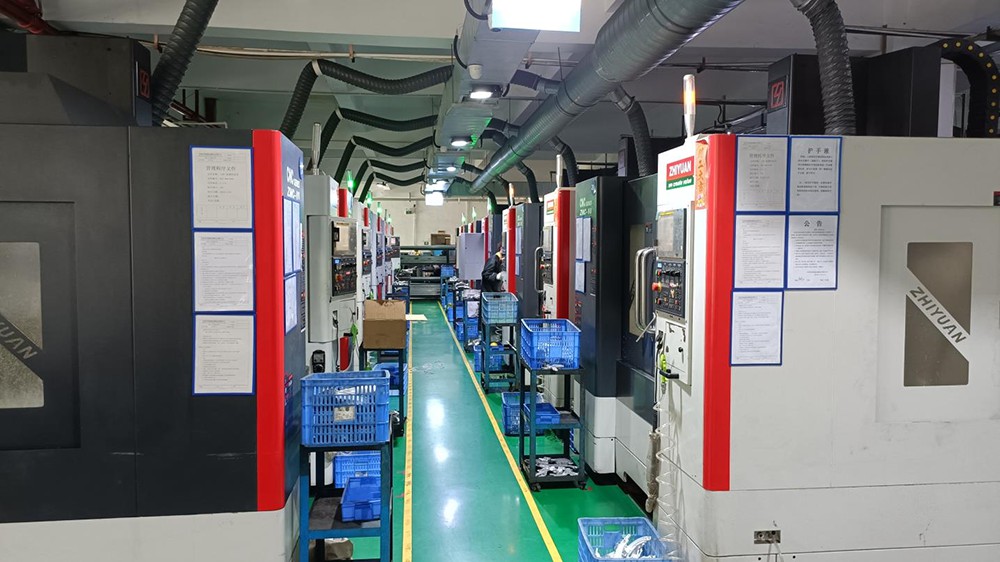
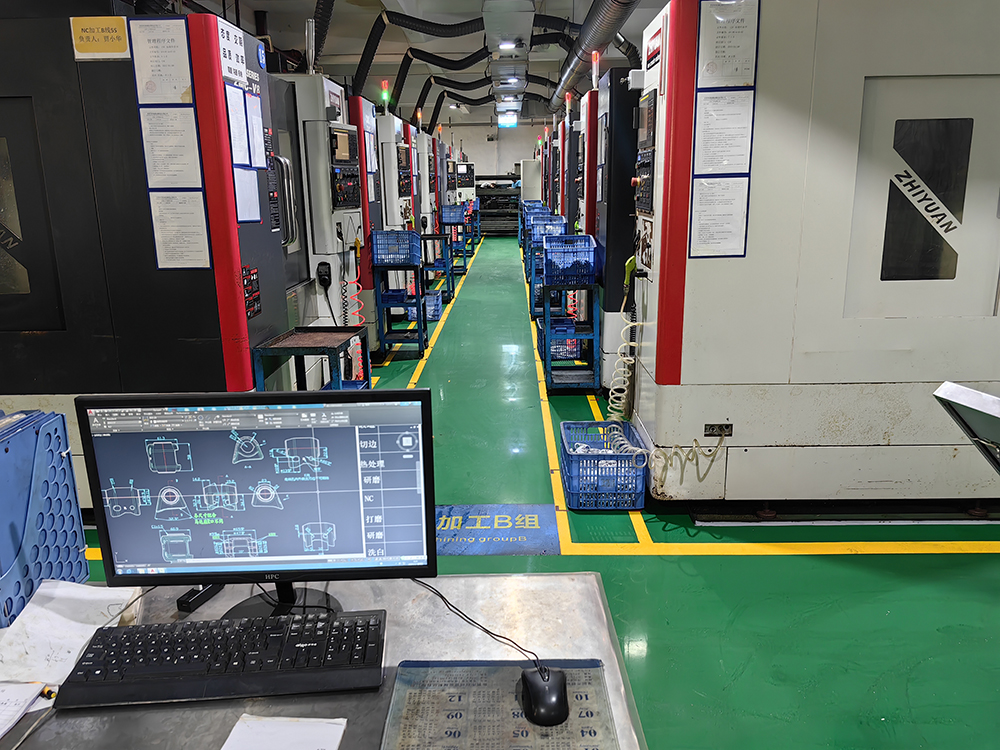
CNC machining, the full Chinese name is 'computer numerical control machining' (Computer Numerical Control Machining), is a manufacturing process that uses pre-programmed computer software to control machine tools and tools for automated machining.
Simply put, it is a computer that gives instructions to machines to automatically cut and carve a piece of raw material (such as metal, plastic, etc.) into designed parts.
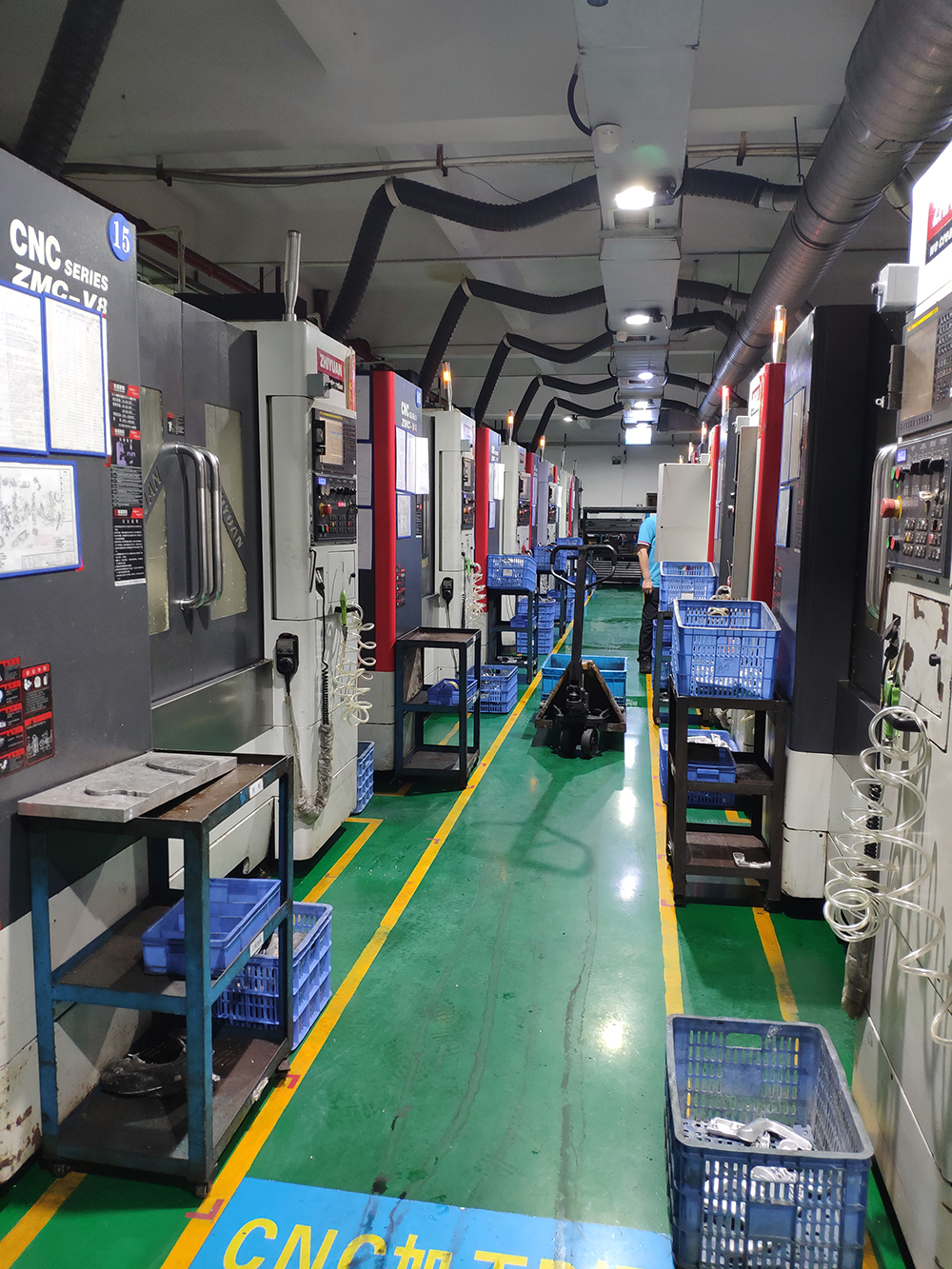
Core working principle: from digital model to physical part
The process of CNC machining can be summarized as the following key steps:
1. Computer aided design (CAD):
- Engineers first create 2D or 3D digital models of parts on a computer using CAD software (such as SolidWorks, AutoCAD, Fusion 360, etc.).
2. CAM programming (computer aided manufacturing):
- Import the created CAD model into CAM software.
- The programmer sets the machining strategy in the CAM software, for example:
(1) Choose which tool to use (e.g. drill, milling cutter).
(2) Set the tool's moving path, rotation speed and feed speed.
(3) Define the depth and number of cuts.
(4) Based on these Settings, the CAM software automatically generates a set of instructions that can be recognized by the CNC machine, usually G code.
3. Setting machine tools:
- The operator fixes the appropriate raw material (called a 'blank') to the worktable of the CNC machine tool.
- Install the required tool and perform a tooling to determine the origin coordinates of the workpiece.
4. Automated processing:
- Enter the prepared G code program into the CNC machine tool.
- After starting, the computer system (controller) of the machine tool will read the G code and control the movement of the tool on multiple axes precisely according to the instructions, gradually removing the excess material from the blank, and finally getting a solid part completely consistent with the digital model.
5. reprocessing :
- After processing, the parts may also need to be subjected to some subsequent treatments, such as grinding, sandblasting, spraying or electroplating, to achieve the desired surface finish or performance.
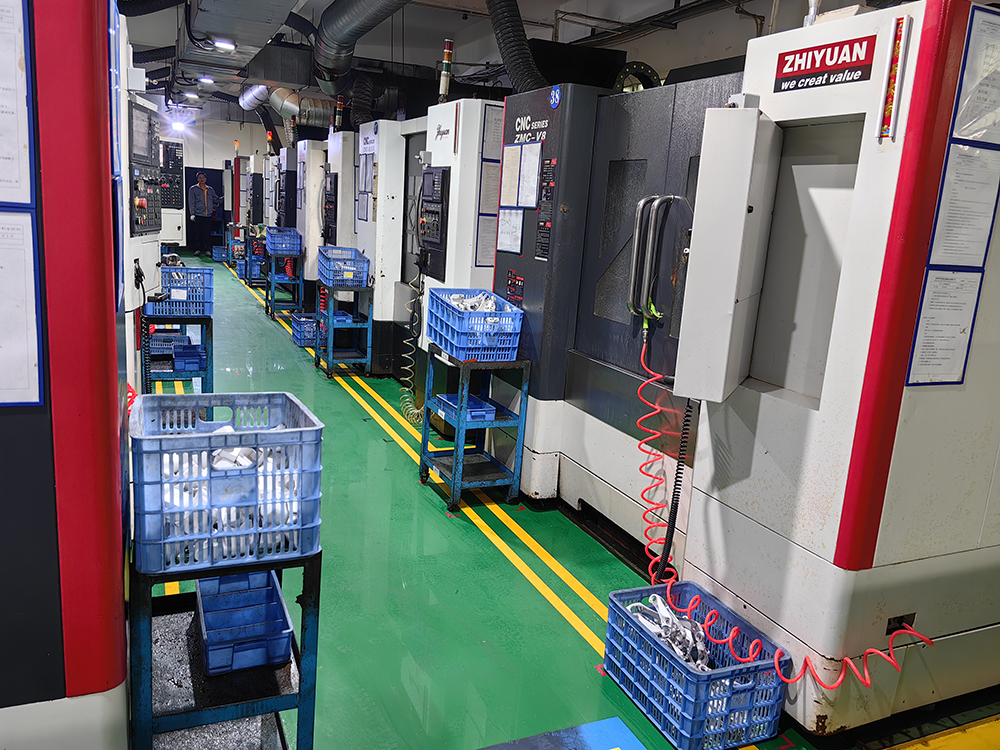
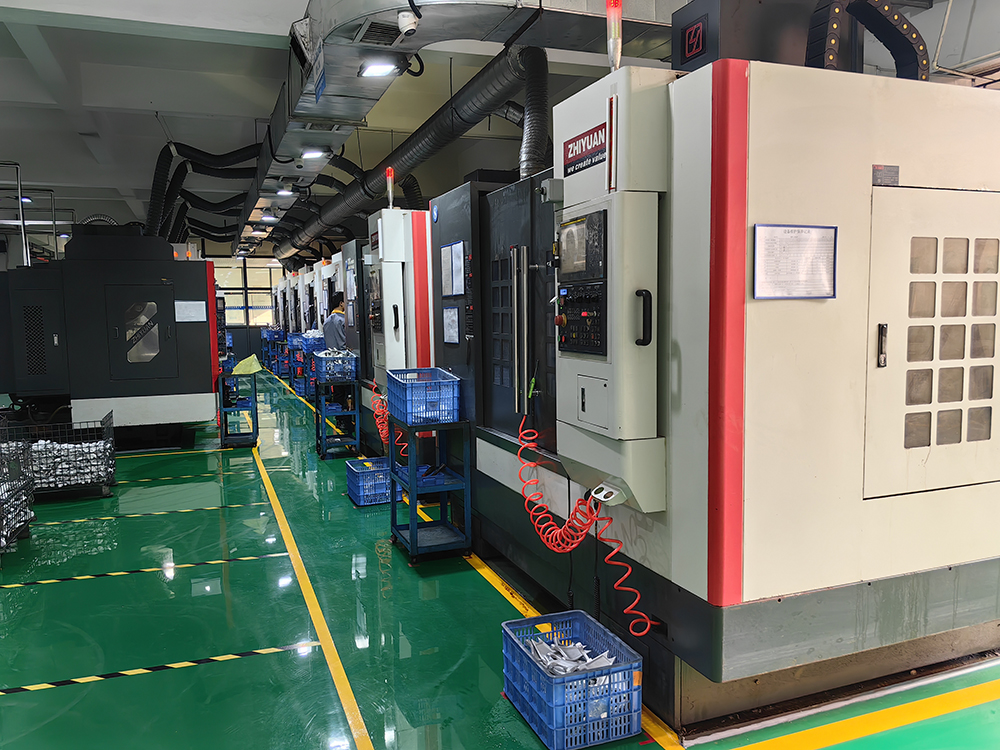
Main types of CNC machining
CNC machining is mainly divided into two categories:
CNC milling :
- Working principle: the workpiece is fixed, the high-speed rotating cutting tool moves along multiple axes, contacts the workpiece and cuts.
- Features: It is very suitable for manufacturing parts with complex shapes and precision features, such as molds, casings, brackets, etc. The common three-axis, four-axis, five-axis milling machine, the more the number of shafts, the more powerful the ability to process complex parts.
CNC turnery :
- Working principle: The workpiece is fixed on the spindle and rotates at high speed, and the fixed tool moves towards the rotating workpiece for cutting.
- Features: Mainly used for machining cylindrical, conical or symmetrical circular parts, such as shafts, studs, gears, flanges, etc. The machine that performs this operation is called a CNC lathe or turning center.
In addition, there are other types of CNC processes, such as CNC electrical discharge machining, CNC grinding, CNC plasma cutting and so on.
Advantages and limitations
Merit :
- High precision and repeatability: Parts with very small dimensional tolerances can be produced, and each part can be completely consistent.
- Efficiency: Once the program is set, it can be automatically run for a long time without being on duty, which is suitable for mass production.
- High complexity: It can be manufactured into complex geometries and internal structures that cannot be done by traditional manual methods.
- Flexibility: By changing the software program, different parts can be produced on the same machine tool with relatively low conversion costs.
Boundedness :
- High initial cost: CNC machine tools themselves are expensive and require professional technicians to program and operate.
- Material waste: belongs to subtractive manufacturing, through cutting material to form, will produce a certain amount of waste (although less than traditional processing).
- High technical requirements: although the degree of automation is high, it still requires experienced engineers and programmers to optimize the processing path and process.
Application Area
CNC machining is almost the cornerstone of modern manufacturing, with a wide range of applications, including:
- Aerospace: engine parts, fuselage structural parts, etc. (often used titanium alloy, high strength aluminum alloy).
- Automobile industry: engine cylinder body, gearbox gear, prototype parts, etc.
- Medical devices: artificial joints, surgical instruments, dental implants (highly precise and biocompatible).
- Electronic products: mobile phone shell, radiator, chip test fixture, etc.
- Mold manufacturing: injection mold, die casting mold, stamping mold, etc.
- Defense industry: all kinds of precision parts.
In conclusion, CNC machining is a highly automated precision manufacturing technology controlled by computer. It can transform digital design into high quality solid parts with high efficiency and consistency, and is an indispensable core technology in modern industry.








Contact Supplier
Send your message to this supplier
Top
Contact Supplier
Send your message to this supplier

Xinyusheng Metal Products

点击右上角
分享给朋友吧
NAVIGATION
PRODUCTS
CONTACT

+86 134 1753 9458
+86 150 1998 3523
+86 137 2888 0942

info@gd-xys.com

No.10, Qianling 5th Street, Jichigang Village, Baoshan Community, Huangjiang Town, Dongguan City

Xinyusheng Metal Products
CONTACT
Add:No.10, Qianling 5th Street, Jichigang Village, Baoshan Community, Huangjiang Town, Dongguan City
Phone:+86 134 1753 9458
+86 150 1998 3523
+86 137 2888 0942
E-mail:info@gd-xys.com
Copyright © 2024 Dongguan Xinyusheng Metal Products Co., Ltd
